The Secret to Social Media

Writers love to rant about the (undignified! soul-sucking!) task of social media promotion. I’m sure at some point I’ve used those very words (blush).

But here’s the thing: when you stop thinking about it as promotion, and give yourself permission to have fun, it’s kind of, well, fun.

Of course, I just started; my Facebook account is four years old, but my Twitter, Goodreads, and Pinterest accounts (not to mention this blog) are babies.

It’s funny—now that I’ve figured out how to format a blog, scan Flickr for Creative Commons photos and attribute them correctly, and quell the anxiety of hitting “publish” without the validation of an editor, I find that blogging doesn’t take much time. What takes time is researching topics like

  • should fiction writers blog?
  • what should fiction writers blog about?
  • aren’t writers just blogging to other writers?
  • how do I keep my chocolate chip cookies from getting all crunchy around the edges?

Whoops, never mind that last one.

Anyway, if I’d applied those hours toward blogging, I could have started a year ago. And this article from The Write Life by Chuck Sambuchino silences the question of whether fiction authors need a web presence.

You’re supposed to ease into social media, but that’s what they say about gardening, too. And my family was so excited about our first, we bought an abundant, crazy mix of seeds and scattered them wherever we felt like it. That was our most fruitful garden; since then, we’re lucky to grow zucchini (and anyone can grow zucchini).

So I plunged in, and here’s my take so far:

Pinterest

Ah, I get it now. As a writer, I’d forgotten the pure joy of expressing emotions solely through visual imagery. I remember doing it as a child—with stickers on my school binders, magazine pages lining my bedroom walls and dreamy abstracts floating on my computer screen. With Pinterest, you can create boards that reflect the things you care about, and you never have to say a word.

Goodreads

What I love most about this site, so far, is I have one place to list my “to be read” books. Now I can collect all the scraps of paper, sticky notes, and electronic lists buried in my phone, and shelve those titles in Goodreads. Voila! A book lover’s dream.

Twitter

This was supposed to be my favorite, because that’s what everybody says. I do like Twitter—there’s something about the immediacy of it that’s freeing—but it’s confusing. I tried learning it before tweeting, but on Twitter it’s easier to learn by doing. There’s no real fear of judgment; people are just cool. And it moves so fast, no one’s going to hold it against you if you, like I did at first, respond instead of retweet, or whatever. It’s all good.

Facebook

After being on Twitter, Facebook feels like watching life in slow motion. But that has its moments.

Blogging

My personal favorite. This has been a shock—I worried about the time it would take to blog (see above), I worried no one would read my blog . . . now I know it’s about perspective. If you enjoy doing it, the rest is just icing. And since I enjoy writing (and am used to doing it for free), blogging doesn’t feel like wasting time at all.

Still, comments are nice 😉 Got one to share?

“So, What’s Your Book About?”

Image from Flickr by Horia Varlan

Image from Flickr by Horia Varlan

At a writing conference last year, I met a teenage boy who asked me what my book was about. Fair question. We were waiting for a judging panel to draw random names from a large crowd eager to “pitch” their book ideas. Only 20 people would get the chance, and there would be a single winner, who would be introduced to an agent. We stood by while seats were arranged, poring over our one-minute pitches.

“Okay, here’s what I’ve got,” I told him. After a deep breath, I plunged into the 60-second description of my novel, then looked at him expectantly. He raised his eyebrows. “So, basically,” he said, “your main character is bat-shit crazy?”

I burst out laughing. He’d certainly eased the tension. “I guess so,” I said. “Now, what about yours?”

He compared his book to Twilight; it had a love triangle, werewolves, vampires, set in high school. I told him it sounded great, wished him luck, and found a seat.

The boy never got his chance, but I did. When the judges called my name, I looked back and saw him giving me a lopsided grin and a thumbs-up. I pitched my novel—and lost. But the judges said the decision was difficult, and they wanted to acknowledge their close second choice. That was me, and I was declared runner-up, sharing the stage and receiving some nice prizes.

I was disappointed, sure, but looking back, my book wasn’t ready for an agent. I’d completed the first draft only six months before, and would spend another year and a half revising it before finding a publisher. I expect it will go through several more revisions before its release next year.

What the conference did was force me to summarize my 45,000-word novel onto one page. And although the novel itself would change many times, that first pitch didn’t change much at all.

Here’s what it looks like:

When Marin’s world is shattered in an instant, she withdraws to the world of her dreams. At night, in this fantasy of bright forests and shadowless skies, time does not move and grief cannot find her.

Then a teacher refers Marin to the school counselor, where she’s pulled from her solitude and thrust in a group of troubled peers. Her anger breaks through and begins to kindle other emotions: empathy for others, desire to form friendships, and hope for a new dream. She is slowly waking from her grief.

But something in her dreams doesn’t want her to wake up. And as those dreams turn to nightmares, Marin knows she must face the demons she’s created, and conquer what lies behind the fourth wall.

So that’s what my book’s about! Just don’t ask me what the next one’s about. That’s a story for another day . . .

Surprise!

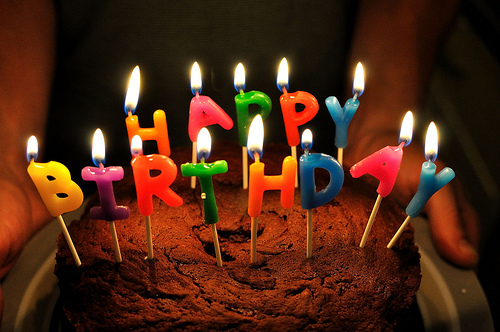
On Monday, I sat peering over a birthday cake, surrounded by my son, daughter, and husband. A handful of flickering candles marked my 38th birthday. My three greatest wishes had already come true, but they were waiting, and the ice cream was getting soft; what to wish for? I thought of one dream that hadn’t come true. I closed my eyes and blew out the candles.

On Tuesday, the email arrived. My book will be published in 2014 by a lovely small press called WiDo Publishing. The novel is no longer called The Fourth Wall, giving it a sense of mystery even to its author. Who knows what it will look like in a year? All I know is it will look like something other than a manuscript sitting in my computer. It will be printed and bound and on bookshelves.

Blogging is not a natural medium for me. With fiction, you never submit a first draft (or a second for that matter), and I’m a little terrified of putting words out there that haven’t been scrutinized and set aside for a few weeks to make sure they’re worthy of your time (and error-free).

Obviously, this has to change. I owe it to the people at this small press—who believe in my book and are taking a chance on me—to do my part. This includes blogging, tweeting, and pinning. I might blog infrequently (several times per month vs. several times per week), but I will do it faithfully, and hope you’ll come along.

Give me some time to find what works—I’ll probably mix in writing about writing, writing about publishing news (blog tour! book signings!), and writing about topics in my novel, like lucid dreaming. If one or more of these don’t suit you, well, stick with me anyway. And then let me know what you’re thinking—in the comments or in a private email. I want to write what you want to hear, but I may need guidance. I’m a terrible mind reader.

See that subscribe button on your screen? Just type in your email address and click the button. This is going to be fun!