Everything Counts

Image by Orna from Pixabay

A recent article in Literary Hub explored the phenomenon of super-readers, those extra-devoted bookworms who read anywhere from one hundred to several hundred books a year. How do they manage this staggering output? Are they speed-readers? Are they all retired empty-nesters? Where do they find the time?

The author of the piece asked these questions to over a dozen super-readers, defined as those who read a minimum of one hundred books per year (audiobooks not included), making sure to exclude those who read for a living. She whittled down their habits to five recurring patterns, one of which is

They read in the margins of life. 

Aside from being quite poetic, I found this method especially interesting because it can also be applied to writing. Most of the people interviewed for the article have full-time jobs and families. They’re able to finish so many books a year partly because they carry books with them and read in fragments of time—in doctors’ offices, on lunch breaks, on the bus, before bed. 

Many writers also have full-time jobs and families. They may only be able to finish their books by carrying notebooks with them—jotting down ideas on their lunch breaks, working out plot holes while waiting in lines, drafting a page or two in that quiet slice of morning before work and in the bleary and often bone-tired moments before bed.

Those fragments of time accumulate quickly. Eventually, they’re bound to add up to a whole book—whether that book is being read, or whether it is being written. Like the article points out, “Five minutes count. Ten minutes count. One chapter counts.” 

Everything counts.

Can You?

Image by Peter H from Pixabay

As a lifelong Stephen King fan, I have a handful of the master of horror’s books in regular rotation. In any given year I’m likely to reread The Stand, Pet Semetery, Firestarter, Different Seasons, It, or The Shining, just to name a few favorites. Despite the darkness of the stories, they feel like comfort reads to me, probably because they lead me down that irresistible and shadowy path into the past where I first discovered them. For some reason though, it had been decades since I’d reread Misery

That’s easily remedied, I thought back in March as I was searching for the perfect book to wrap up a lovely spring break. I still have my copy from the 90s, an old mass market paperback with a torn cover and yellowed pages, although I had to steal it back from my daughter (Misery’s the one Stephen King book she’s read, and she adored it so much I think she’s afraid nothing else will live up to that standard). After plucking it off her bookshelf I settled in to reacquaint myself with the story, which I did with immense pleasure and predictable nostalgia on sunny days in the shade of my porch and long evenings propped up against my wedge pillow, sipping coffee (teacher breaks really are the best). 

A few things surprised me about Misery. One is that, at 340 pages, the novel is uncharacteristically short. Another is that it is an absolute treasure trove of authorial insights that I can appreciate now in ways I wouldn’t have been able to before; after all, the last time I read the book, I hadn’t yet written one of my own. 

For those unfamiliar with the story, the main character Paul Sheldon is a famous author who gets rescued from a car crash by his number one fan, who proceeds to kidnap him and force him to write a book just for her. In doing so, he must revisit a series he’d put behind him and resurrect a character he’d previously killed off, all while suffering the excruciating pain of two shattered legs and the constant terror of disappointing his sadistic captor. 

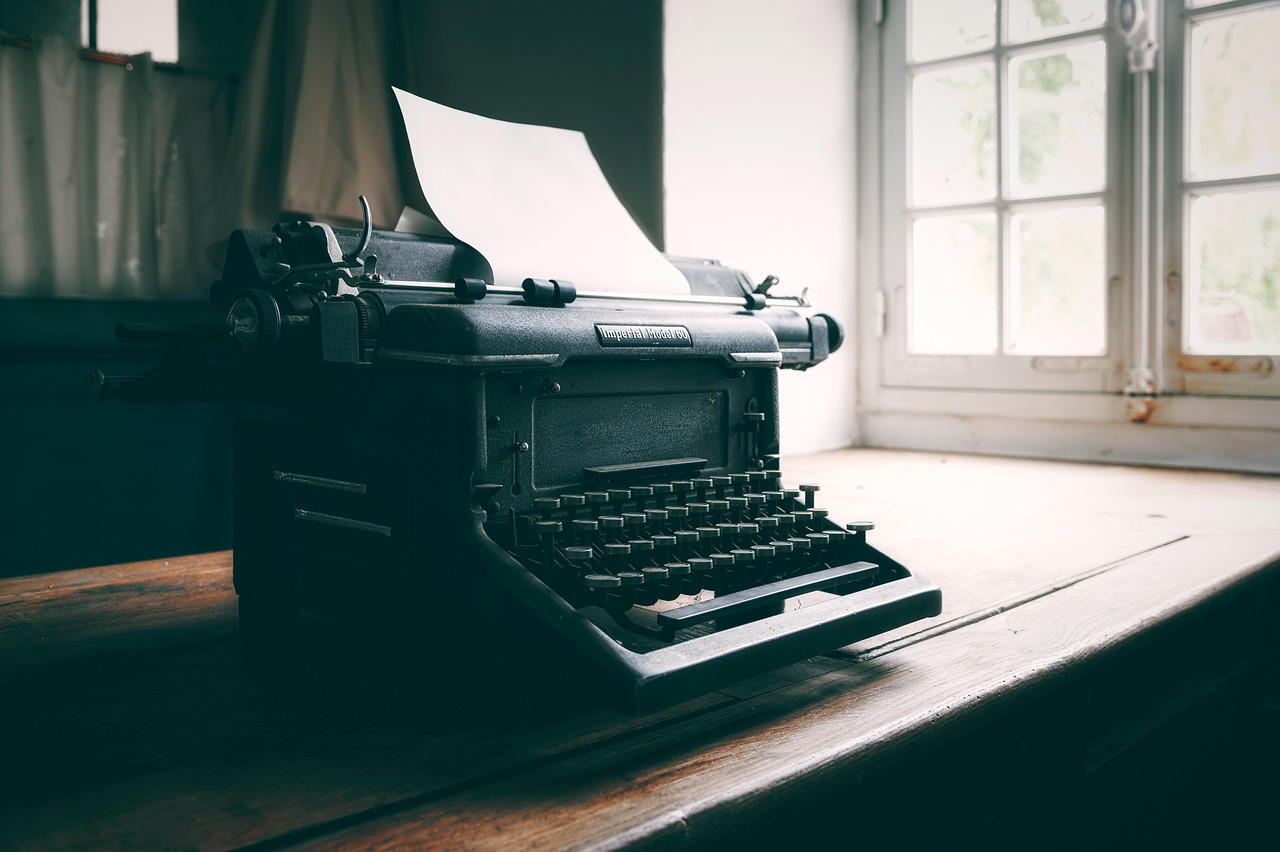
That’s way more pressure than I’ve ever faced with a mere deadline, yet the ways in which Paul struggles with the work are universal to writers. He has several false starts. He types a chapter heading and stares at all of the white space below it. He gets ideas and then rejects them. He begins to feel like the typewriter is mocking him. Paul is stuck, frustrated, desperately trying to figure out how to bring a character back from the dead in a way that feels fair

And then he remembers a game he played as a young boy in summer camp, where the kids would sit in a circle and tell a story, led by the camp counselor. The counselor would introduce the main character and set a scene which immediately put him or her in danger. Then the counselor would choose one camper, say, “Can You?” and start a ten-second timer. In that time, the camper had to further the narrative, which included getting the main character out of whatever dilemma they were in. Some kids would go blank; some would try to cheat by using a deux ex machina. Those kids had to leave the circle. The ones who managed to advance the plot fairly got to stay in the game.

Paul remembers how he almost always won. Something in him—that quality that would lead him to becoming a prolific best-selling author—drove him to embrace the challenge, to furiously work out the plot in a race against the timer. And so, in the room where he’s being held prisoner and forced to write a book from a premise that feels impossible, he asks himself the question: Can You? And he does.

Anyone who writes novels can relate to the inevitable and seemingly insurmountable plot issues that come with drafting hundreds of pages of a manuscript. At some point your story is going to stall. You get tangled up in narrative threads. You get lost in the weeds. You write yourself into corners. You begin to doubt everything. You want to give up. But that question persists—refusing to leave you alone, following you every waking moment and into your dreams, a challenge, a taunt: Can You? 

Of course you can.

Spring Break (Again)

Image by Shirley Hirst from Pixabay

Okay, I’m cheating a little. Technically I already had my Spring Break, a lovely two weeks off from work in which I spent an inordinate amount of time reading books and enjoying the quiet. Now I’m back at work but on a two-week break from school—much needed in a fast-paced master’s program. I’ve spent my homework-free evenings… reading books and enjoying the quiet. In April (probably after tax season), I’ll return with a fun post about rediscovering a favorite novel and, within it, finding new writerly inspiration. Until then, happy first days of spring!

Unexpected Gifts

Image by Couleur from Pixabay

Once or twice a year I’m reminded powerfully why writing and sharing our stories is so important. Usually the reminder is in the form of an email sent by a stranger. I can’t express what these unexpected gifts in my inbox mean to me. They often seem to come at a time when I need them most. 

I received one in January from a reader who’d discovered an essay I’d written in 2017. The essay, published in Motherwell magazine, described the period in parenthood when one of your children begins to outgrow the other. When I wrote the piece, my daughter was fourteen and my son was nine. She was navigating high school, he was still in elementary. Their once-shared path through childhood had diverged. 

Readers left comments throughout the years—sometimes older siblings, sometimes younger ones—each quietly devastating. But the email I received last month was from a mother. She was going through the same dilemma with her children, who were around the same age as mine were all those years ago. It was the most heartbreaking time she’d experienced in parenthood so far, she said. She wanted to know how it had turned out with my kids, who are now adults. 

It took me nearly an hour to draft my response. I wanted to say the right things. I wanted to acknowledge the fact that she’d reached out with a very personal story and let herself be vulnerable. Mostly, I wanted to give her hope.

Just like her email had given me hope. That we need each other’s stories. That they’re worth writing. That capturing something painful and sharing it can, nearly a decade later, continue to help others feel a little less alone. 

Creativity, Connection, and Hope

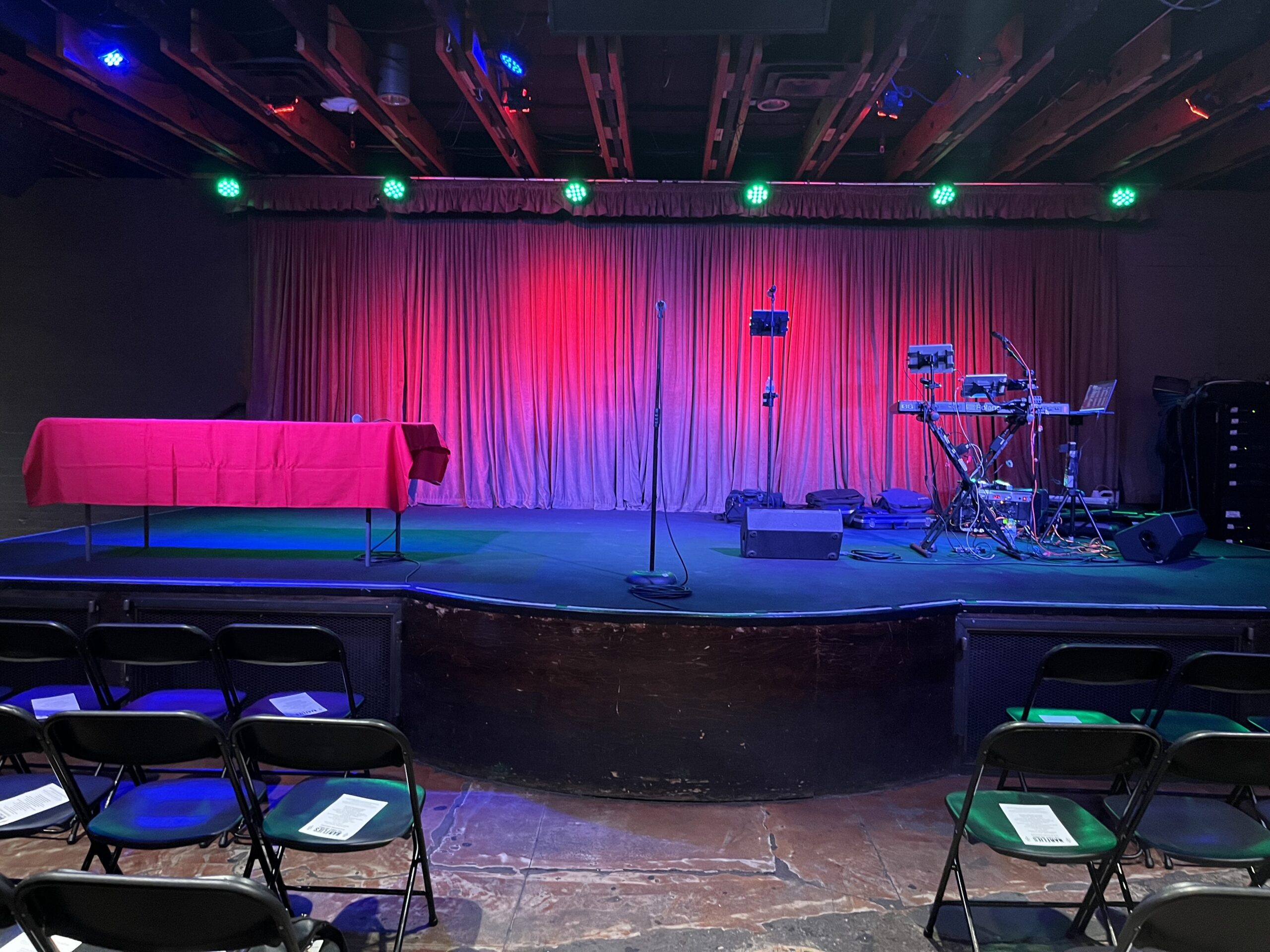
Crescent Ballroom in Phoenix

Before setting new goals, it’s important to look back at accomplishments and take a moment to celebrate them. I didn’t do everything I wanted to do in 2025, but I held on to my publishing streak (thirteen years running!) and restored the balance in my writing life that I’d vowed to focus on this time last year.

In that post from what feels like a lifetime ago, I wrote about the fact that I’d spent a year focused on my cozy mystery series and I needed space to imagine whole new stories, time to edit, publish, market, write, and time to just dream.

Mission accomplished. My writing stats from 2025 include drafting four new stories and one new essay, adding over 10,000 words to my current novel, blogging every month (except May), submitting work to three literary magazines (one successfully!), entering a contest, publishing a new motherhood piece, and performing in a spoken word event in December.

The last one is particularly meaningful. In April, I talked about the importance of having a writing community and how I felt I’d lost mine. Not being on social media makes it difficult not only to keep in touch with others but also to stay in-the-know about literary events. I hadn’t stood on a stage and read my work to an audience in over seven years.

In keeping with my resolution to stay more connected, I reached out to some old friends via email and was happily invited to participate in Bar Flies’ annual Eating Christmas public reading at Crescent Ballroom. It was lovely to see familiar faces and hear amazing stories, and to feel those once-familiar butterflies as I crossed the stage holding the pages of my new essay.

I have high hopes for 2026. I hope to stay connected, and to cross more stages. I hope to stay creative, and to write my heart out. There are so many stories to tell. Along the way, I’ll post here once a month and keep you updated. You didn’t think I was going to forget that, did you?

Beginnings and Endings

Image by aspasy from Pixabay

Twenty twenty-five was a year of new beginnings, and of endings.

It was the year I turned fifty. The year my daughter graduated from college. It was the year my son graduated from high school and moved away for college. It was the year I stopped writing, then started again. It was the year my mother died.

There are months I barely remember, that already seem a world away. I drifted through them like a ghost. Other months I raced through, checking days off on the calendar, desperate to put them behind me.

There were months that started to feel normal, until I realized I didn’t know what normal was anymore.

And through it all, there was a line I wrote in the first fragile attempt to write about the unimaginable: The first real loss changes everything.

Maybe in 2026 I will follow that line to its end. Maybe I’ll just leave it as is.

An Early Christmas Gift

Courtesy of Amy Silverman

‘Tis the season to be grateful, and this November I have an extra-special reason: I was thrilled to receive an invitation to read an essay at the annual Bar Flies: Eating Christmas event!

On December 10, I’ll be taking the stage with some of my favorite Valley writers, including Robrt Pela and Amy Silverman, and sharing a true holiday-themed story.

If you’d care to join us at Crescent Ballroom in Phoenix and enjoy some great stories, music, and drinks, get your tickets now! It would mean the world to me to see you there.

Happy Holidays, everyone!

5 New Spooky Reads for Fall

Image by socialneuron from Pixabay

It’s been raining for weeks, I’ve been lost in the luxurious limbo of Fall Break, and there’s never been a better time to share spooky book recommendations. Here are five new releases that are perfect for autumn.

The Bewitching by Silvia Moreno-Garcia

Silvia Moreno-Garcia bewitched us all with her 2020 breakout novel Mexican Gothic. The prolific and versatile author’s newest is a multigenerational horror story filled with magic, mystery, witches, and Moreno-Garcia’s sublime prose. Definitely an October story.

Wake the Wild Creatures by Nova Ren Suma

Nova Ren Suma fans, like myself, have to wait a long time between novels, but the wait is always worth it. Suma’s latest involves a mysterious mountain refuge for women, a fierce teenage girl fighting her way home, and the uneasy sense that not all is what it seems.

The Witch Who Never Was by Carrie Ann Lahain

If you’re familiar with my blog, you’re well acquainted with the work of my critique partner, Carrie Ann Lahain. Carrie has written everything from historical fiction to the zombie apocalypse, but her series The Witches of Port St. John seems particularly relevant this time of year, and the latest just came out. Perfect timing!

The Possession of Alba Díaz by Isabel Cañas

Isabel Cañas debuted in 2022 with her critically acclaimed novel, The Hacienda. If you happened to miss it, now’s a good time to get to know this author’s work. Start with her feature interview in the October edition of Writer’s Digest, and then add her new release to your fall reading list. It has romance, demonic possession, and a haunted Mexican silver mine. What more could you want?

Bury Our Bones in the Midnight Soil by V. E. Schwab

It seems with every new novel, V.E. Schwab gets even more ambitious. Bury Our Bones in the Midnight Soil is no exception. A sprawling gothic fantasy featuring toxic lesbian vampires and dark romance? Sounds like a great way to spend a few rainy autumn days.

Happy reading, everyone, and have a safe and fun Halloween!

Don’t Hide Your Dreams Away

Image by Steve Johnson from Pixabay

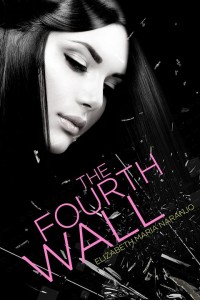
A few years ago I was cleaning out my closet and decided to dedicate a shelf to my writing. I dusted off my Fourth Wall poster board and stood it upright. I unpacked boxes of author’s copies of the books I’d published and lined them up with the poster. Next to those I added all of the anthologies I’ve been featured in over the years. 

It never occurred to me why I’d chosen a shelf in the closet.

When a local author shared a photo recently of an entire bookshelf she’d devoted to her own novels, I stared at the picture in wonder. I felt a surge of happiness for her—what a beautiful tribute to her accomplishments!—and then I felt a crush of sadness for me. Why had I chosen a shelf in my closet?

Failing to celebrate our achievements is unfortunately all too common. Perhaps it’s an effort to be humble that makes us silence our own success. Humble is a complicated word, however. Synonyms range from respectful to submissive. From deferential to insignificant. Gemini’s oddly poetic definition is “to be not proud.” 

But I am proud. I just need to get better at showing it.

So last weekend, I emptied the shelf in my closet and dusted off that poster board again. Then I rearranged my bedroom bookshelves and created a prominent display of my published work. It’s one of the first things I see in the morning when I wake up, in the afternoon when I get home, and at night before I drift off to sleep.

It’s a start.


(Book) Size Matters

Image by Photorama from Pixabay

In February, ReaderLink, one of the biggest book distributors in the US, announced they will stop distributing mass market paperbacks at the end of the year. Up to seventy percent of mass market paperback sales in the US are sold by ReaderLink’s customers, including Kroger and Walmart. And, with the exception of classics and cozy mysteries, it doesn’t look as if the Big Five publishers or major retailers like Barnes & Noble will do much to save the dying format.

I’m so bummed about this. The mass market paperback size has always been my favorite. I get it: they’re cheap, and you get what you pay for. They’re not beautiful and shiny like hardcovers, their paper and binding aren’t as high quality as trade paperbacks. Their pages will yellow, their spines will crack.

And these are just a few reasons why I love them.

Mass market paperbacks are meant to be consumed. They’re happy to go everywhere with you—the doctor’s office, the salon, the airport. They don’t mind being shoved into an oversized coat pocket or a small handbag. You can even dog-ear their pages; they like being well-loved and they love when it shows.

The lower cost of the mass market paperback makes them a low-risk buy. I’ve discovered many an author by browsing the horror, romance, and mystery shelves at big box stores and used bookstores alike. Cool cover, interesting blurb? Sure, it’s six bucks. Why not? Think I’m going to take that chance on a thirty dollar hardcover, or even a seventeen dollar trade paperback? No way.

Speaking of trade paperbacks, I’m sorry, but they are just too darn big. I cannot comfortably read a trade paperback in bed, which is where I love to read most. I like to snuggle up on my side with my head on the pillow and lose myself in a story, but with a trade paperback the book is always trying to flop closed, and I can’t see both pages at once. And hard covers aren’t comfortable to read anywhere.

Maybe I’m biased. So many of the books I grew up reading were mass market paperbacks. But there are some genres that were meant for the smaller size. You know when you’re walking through Barnes & Noble during the holiday season and you see those cute little Christmas romances on the endcap displays? It just won’t be the same when they’re supersized to a six by nine format.

Still, I guess us pocket book lovers will have to get used to it.

As long as they don’t come for our cozy mysteries.