Where to Get Your Work Critiqued (and Why You Should)

Image from Flickr by LocoSteve

Image from Flickr by LocoSteve

The quickest way to improve your writing is by getting it critiqued. Reading blogs and books is fine too, but it can be redundant—you’re slogging through the same general advice, looking for solutions to your unique writerly problems. We all have them, and they’re hard to spot.

Several years ago, I wrote a story about a single mother taking her daughter to a baseball game. I revised it endlessly, and after a year or so started submitting it. No takers. I set it aside for a few months and re-read it. I thought it was pretty good but had to acknowledge something was wrong. Some minute thing having to do with rhythm and flow in the center of the story, but I couldn’t put my finger on it.

Finally, I submitted it to a contest for ten bucks and paid another ten for a critique. I didn’t win the contest, but I found out what was wrong. The reviewer pointed out that, for a story as short as mine (less than 750 words), I’d overused the “power of three.”

I knew instantly what she meant, because “Oh come on, how did I not see that?!” I eliminated one of the phrases, changed two sentences from passive voice to active voice on her suggestion, and submitted it to Literary Mama. “Flight” was accepted, and became my first published story.

Another benefit from having your work critiqued is knowing what you’re doing right. It’s never obvious, is it? As writers, we’re repeatedly warned that those passages we love most are the ones that should probably die bloody, red-ink deaths. “Kill your darlings!” But that’s not always true. Writers spend years honing their instincts, so it makes sense that their instincts are often right. How do you know when to trust them? You get an objective opinion. Not a family member. Not a friend.

“But objective opinions are still just opinions and therefore actually subjective.” That’s true, smarty pants, which is why when I revised “Flight,” I didn’t follow every suggestion from the reviewer. I recognized a few of them were stylistic preferences, and I chose not to implement them. You have to find that sweet spot—somewhere between paralyzing insecurity and stubborn arrogance—to get the most from a critique and become a better writer. And you do want to become a better writer, right?

Here are four places to get your work reviewed; I have used all four and fully recommend them. For the first three especially, make sure your work is as polished as can be first, because you’re also submitting it. If you’re looking for feedback before you submit your work, skip to #4, or check out my Classes and Critiques page.

1. WOW! Women on Writing: WOW! runs a quarterly flash fiction contest; it costs $10 to submit an entry and an extra $10 for an optional critique. Sound familiar? 😉 Since submitting “Flight” I’ve paid for several more critiques on contest entries, and each time I’ve learned something new. Feedback is broken down into the following categories: subject, content, and technical, with an overview of your story. Once you start using the feedback to improve your work, you just may earn back your entry fees in future winnings (WOW! pays hefty cash prizes).

2. Blue Moon Literary & Art Review: submitting to this magazine costs nothing, but if you want feedback, you can pay $10. I paid the $10 and although my story was rejected, I received a very nice, thoughtful critique. I applied most of the editor’s suggestions and resubmitted to a magazine called Bartleby Snopes. The story was accepted, and was later nominated for a Pushcart Prize. Money well spent! And speaking of . . .

3. Bartleby Snopes: Nathaniel Tower not only runs a fantastic fiction magazine, he is an all-around cool guy, and super generous. There’s no submission fee to submit to Bartleby Snopes, and every submission receives feedback—anywhere from one sentence to several paragraphs–unless the author chooses the “no feedback” option. In the past three years, I’ve submitted to a whole lot of magazines, and this is the only one I’ve come across that guarantees a personal response from the editor. See? Cool guy.

4. Story in Literary Fiction: William H. Coles is a prolific author passionate about the art of literary fiction. His website is loaded with resources for fiction writers—in-depth articles covering dialogue, characterization, point-of-view, narrative arc, humor, conflict, you name it. Mr. Coles offers the following services for free: a manuscript evaluation of up to 1,200 words, a workshop and a “Mentor’s Corner” where you can ask him any question related to literary fiction. Anything you post under these three services will be on the website. That didn’t stop me, though—click around in the workshop and see if you can find me. 🙂

Note that three of the above accept fiction only. Blue Moon Literary & Art Review accepts both fiction and nonfiction.

Good luck! Keep writing.

This is Your Brain After Developmental Edits

Image from Flickr by Andrew Malone

Image from Flickr by Andrew Malone

Remember that commercial from the 80s where some guy holds up an egg (“This is your brain.”) and then cracks it into a sizzling frying pan (“This is your brain on drugs.”)?

That’s a writer’s brain after a round of developmental edits.

I sent them in today, after four weeks of wrestling with plot lines, ripping open scenes and patching them with new ones, and ruthlessly deleting a character who just didn’t fit in anymore. (Hey, it’s been a long month, and I had to take it out on someone.)

I’ve had days when I tacked on 1,000+ words, and days when I worked just as hard and ended with a net loss of words (those are the better days—it’s more fun refining than writing first drafts). I neglected a paid writers’ workshop, an expensive mid-November conference, my blog, and the whole idea of NaNoWriMo.

There have been other ups and downs in November. My application to teach an essay-writing workshop was denied based on a lack of formal teaching experience. My short story The Marshmallow Tree won honorable mention in a contest. I turned down, for the first time, an invitation for a reading due to an utter lack of ideas (refer to analogy of fried brain). I received two rejections on short stories, but one of those rejections came with helpful, encouraging notes. And I met my goal to finish the first round of edits on The Fourth Wall by November’s end.

In short, I’ve been living the writer’s life. I don’t know whether to laugh, or cry, or maybe just read a good book. But I think I’ll call it a month. Happy Thanksgiving, and I’ll see you in December!

Back to Basics

Image from Flickr by yiorgos georgiou

Image from Flickr by yiorgos georgiou

Last week was scary. Not because a 6-foot tall Grim Reaper jumped from the shadows of my neighbor’s porch and hissed at my children (that was actually pretty great), but because I experienced a serious case of writer’s block. And I’m under contract.

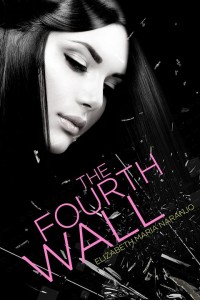
When I received my initial round of edits on The Fourth Wall, I was ecstatic. This is the part, I’d been told, that hurts the most. These are the “big picture” changes, when you have to delete major characters you’ve invested years in, when your favorite scenes are gutted, when you’re asked to rewrite an entire novel in a different point of view (my worst fear).

None of that happened. My editorial letter had lots of suggestions, but the big ones involved adding to the book. This makes sense; I do write flash fiction, after all. Everything I’ve published thus far has been short; most of it was written to a word count: 500 words, 1,000 words, 250 words. When I sent my novel off to WiDo Publishing, it was a trim 45,000 words, and even that seemed indulgent.

Wow, so I get to write more, I thought. No problem!

Here’s the problem. I wrote The Fourth Wall three years ago. Since then, I’ve tinkered with it: plugged up holes, rewritten dialogue, added depth to characters, extended scenes . . . but I couldn’t remember when I’d last added new scenes. Where would they go?

I scrolled up and down the manuscript, trying to see what could be split apart to make room for new material. I typed pages of notes. But I couldn’t see. And that worried me, because without knowing what to write and where to put what I did write, I wasn’t excited about writing at all.

I was stuck.

Time to try something else. On Sunday, I printed a hard copy of my novel, spread out the pages, and began writing notes by hand. I crossed out sentences and scribbled in margins, and soon the only difficult part was keeping up with the ideas.

Somehow, the physical act of holding paper and writing with an actual pen made me feel more in control. And it’s easier to slash through paragraphs on a page, because it doesn’t feel permanent. Yeah, you can create a new document and know your old one is intact somewhere on the computer, but it’s still hard highlighting a paragraph, hitting “delete” and watching it disappear.

Since Sunday, I’ve added 3,000 words to my novel, and more importantly, I’m excited about the new material. It feels like it did when I was writing the first draft; I’m so fully immersed in my characters’ world that I’m jotting notes in bed, at the dinner table—stealing any moment I can. I’ve been waking up at four in the morning, for God’s sake, and I’m not one to emerge from under the covers until the third snooze alarm.

This is when being a writer pays off. When you can reclaim the pure joy of creating something, when you stop and realize, “my job is making up a fictional world and filling it with make-believe people, and dammit, that’s supposed to be fun.”

And it is. In fact, I think I’ll go back to work now. You’ll overlook any typos in this post, won’t you? I’ve been up since four.

Bring It On

November Moon by Dead Air

November Moon by Dead Air

Most writers work best when pushed to the wall. The deadline is definitely our friend. Which is good, because this week I got the email I’ve been waiting for: my editor has started reading (the novel formerly know as) The Fourth Wall.

This will be the first round of a four-part editing process, and somewhere around the halfway mark, I’ll let you know my publication date. (!!!)

Knowing it would take some time to get to this point, I’d taken on a few more projects:

  • Preparing lesson plans for an essay writing class I hope to start teaching in November.
  • Accepting a surprise invitation from a renowned local artist to perform at Space 55 in November.
  • Signing up for NaNoWriMo because look! November’s almost here! Might as well commit to cranking out 50,000 words on my WIP.

Did I say I was excited to get the email about edits on my novel? I am. And it looks like I’ll be starting those edits around the beginning of . . . you guessed it. November.

Yes, I’m a bit overwhelmed. Yes, I’m smacking myself on the forehead, wondering what I’ve gotten myself into. I know you all would forgive me for skipping a few posts . . . but I’ve gotten used to posting on Fridays, and I can be stubborn. So you’ll probably still see me in your inbox each week, although the next four posts may be shorter. 😉

Wish me luck! As for you, November, all I can say is “Bring it on.”

Seeing Red? How to Respond to Your Editor

First, breathe.

It’s not easy being edited. When you first view your work with an editor’s changes/comments/criticisms, there will be a moment when your heart freezes, and then it will start to burn. This is normal. Do not respond.

Throughout the day, you will compose imaginary emails and engage in silent conversations where you defend your art against the insult of Track Changes. Because obviously this editor just doesn’t get you. You meant to be evasive in paragraph two; you wanted to sound ironic in your closing phrase.

Go ahead and rant silently. Your children may stare in confusion as you mutter and burst into occasional mirthless laughter, your spouse may disappear into the bathroom. They know you’re a writer, that you’re a little strange sometimes. They’ll forgive you.

As the evening goes on, you’ll whittle down your editor’s suggestions to the ones that bothered you most; they’ll play over and over again and the thought of implementing them will make you feel like crying. Pay attention. These are the changes you have to make.

The others, the ones that don’t hurt or merely sting, will categorize themselves:

  • Confirmed—I knew that sentence didn’t feel right.
  • Enlightened—I didn’t realize this wasn’t clear, but I see the problem.
  • Embarrassed—Did I actually write that?
  • Opposed—I see what she’s saying, but this phrase is important.

It may take a few days to get to this point. Wait until you’re there. If you have to, send your editor a polite email explaining that you’re reviewing her comments and working through them. She’ll understand.

When you can think of her with gratitude (she did save you from using the word “just” three times in one page) and remember that she wants your work to be its absolute best (it is also a reflection of her, after all), then you’re ready to respond.

While you’re drafting your reply, don’t be surprised to realize that out of the dozen changes you thought you couldn’t live with, there are now only two.

And when she answers you, don’t be surprised if she says, “I can live with that.”

What’s your experience working with editors? How long do you wait to respond?