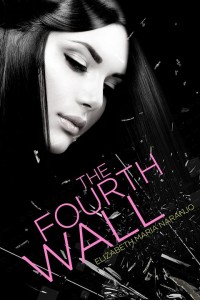
Party Time!

Image from Flickr by foxypar4

Image from Flickr by foxypar4

It’s hard to believe, but the launch date for The Fourth Wall is less than a week away. I remember scribbling in a little spiral notepad the idea for this book nearly three years ago. I still have the notes, and it’s funny to look back at my original vision and see how much has changed. The only thing I seemed to know for sure was how it would end.

That’s the great part about writing fiction–you can choose your own endings. When it comes to publishing fiction, at least in the traditional sense, you can work hard to influence the ending but you don’t get to choose it. Ultimately it’s up to a publisher whether or not your book ends up on bookshelves, so when you get that kind of happy ending, you have to throw a party.

You’ll come help me celebrate, right? OF COURSE you’re invited. And I’m bringing cupcakes…

BOOK LAUNCH PARTY FOR THE FOURTH WALL
Tuesday, July 8 at 7 p.m.
Changing Hands Bookstore
6428 S McClintock Dr.
Tempe, Arizona

Reading, Signing, Cool Giveaways

And did I mention cupcakes?
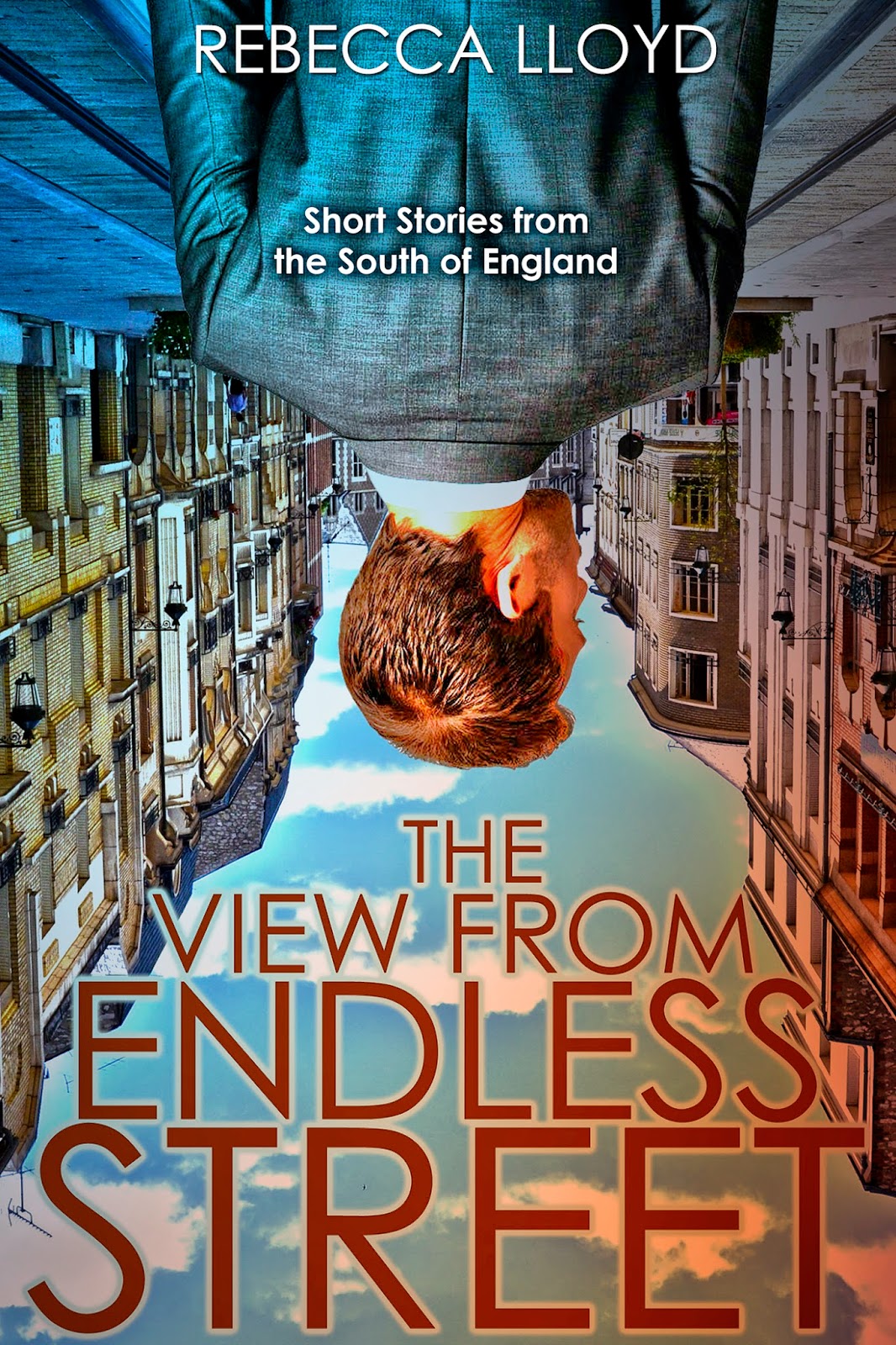
Interview with Rebecca Lloyd, Author of The View from Endless Street

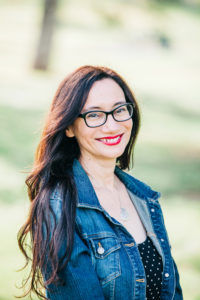
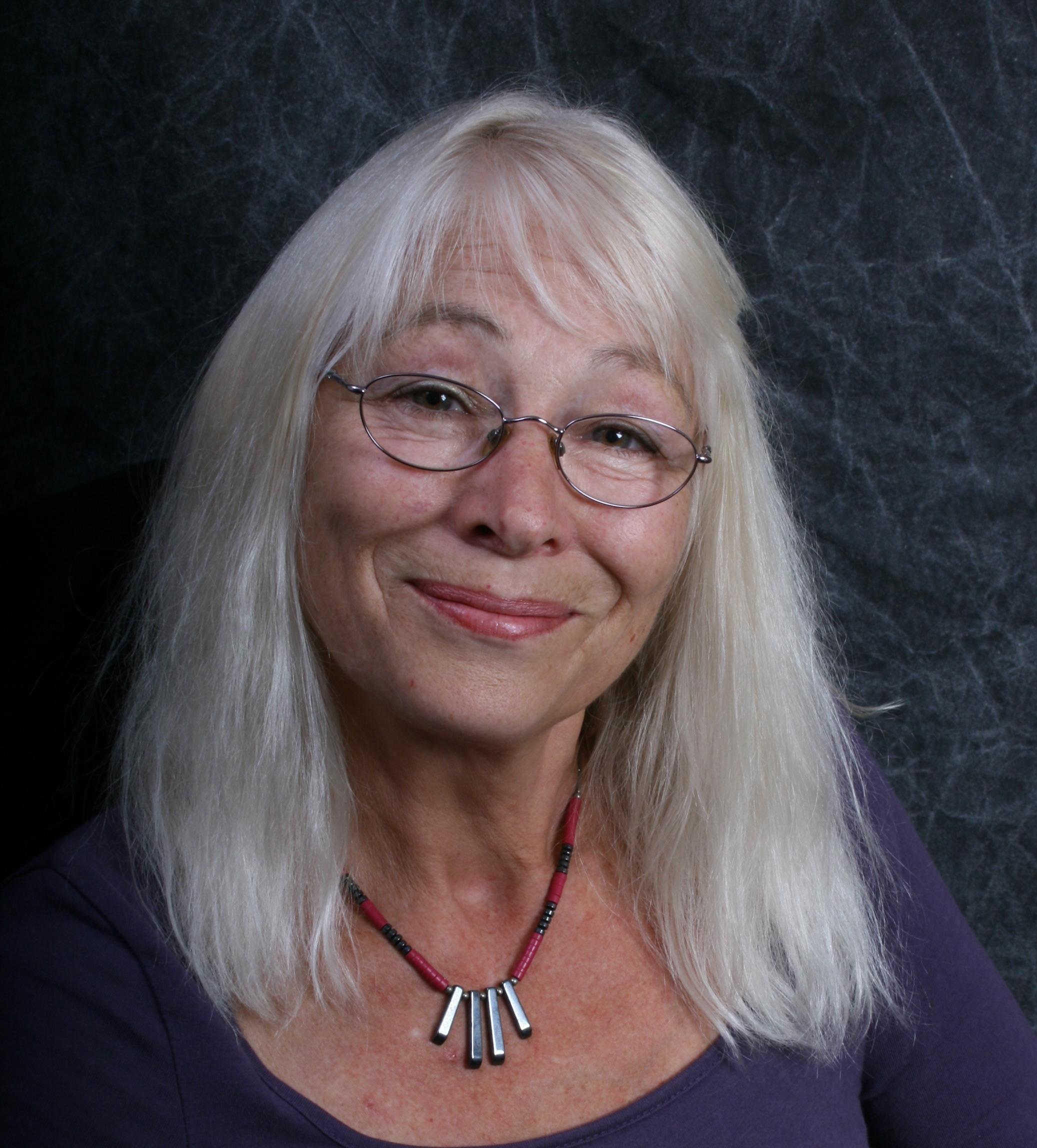
Author Rebecca Lloyd Photo by Tomlinson

Author Rebecca Lloyd
Photo by Tomlinson

I am so pleased to have author Rebecca Lloyd visit with me today on her blog tour. Rebecca and I share a publisher, WiDo Publishing, and I’m a little in awe after reading her short story collection The View from Endless Street: Short Stories from the South of England. It’s a wonderful book filled with gorgeous writing and quirky characters and…well, check out the blurb below. After that, read my interview with Rebecca and leave her a comment–she’ll be popping in from England and wants to hear from you!

About the Book:

EndlessStreet_CVR_MED

With this collection of short stories set in the south of England and beyond, Rebecca Lloyd explores relationships and the brave or foolish things they can make people do. These stories about murder and ghosts, delusion and desperation, obsession and arson, show readers a sometimes sweet, sometimes macabre vision of humanity. Rebecca Lloyd channels Roald Dahl’s wit and flair for the unexpected in this collection that will appeal to the quirky side of the literary reader.

The View from Endless Street is available in print and in ebook format:
To order from WiDo Publishing, click here.
To order the Kindle version from Amazon, click here.
To order from Barnes and Noble, click here.

Don’t forget that if you own an e-reader, you can sample The View from Endless Street for free. The free sample allows you to read Rebecca Lloyd’s award-winning short story, The River, in its entirety. So you have nothing to lose by giving it a try, and I can almost guarantee you’ll want to read more. 😉

About the Author:

Rebecca Lloyd lives in the city of Bristol in the South West of England. She has two daughters and three grandsons. Apart from fiction writing, she works as a writing tutor and editor. She won the Bristol Short Story Prize in 2008 for a single story – The River, and in 2010 was a semi-finalist in both the Hudson Prize for a short story collection and the Dundee International Book Prize for a novel. In 2014, she was shortlisted in the first annual Paul Bowles Award in Short Fiction. She is the author of Halfling, (Walker Books 2011), and co-editor of the anthology Pangea, (Thames River Press 2012).

Rebecca is on Goodreads and Facebook.

Elizabeth: You write on your blog that it’s easy for writers to fall out of the habit of writing and that it can take “a huge effort to get back into it.” Can you tell us about your own writing habits?

Rebecca: Well, when I had to work for a living, I’d get up at around 5am, or sometimes earlier because I liked to watch the dawn, and I’d write until 8am and then do my day’s work. Now that I don’t work, my routine is a great deal less rigorous, I get up at around 7.30am and I’m at my desk by 8am. I work until lunchtime and then after that, the rest of the day can start. I try to stop writing when I sense my brain is getting tired, you know, like when you’re starting to write lame dialogue. If that happens I know it’s time to leave the computer, but I make a note alongside the text which would say something like ‘would she really have said those words under the circumstances?’ The next day, I can get back to it and deal with it.

I try not to open my emails or do any social networking stuff before I’ve done my morning’s writing. In the afternoon, I might still be very engrossed with the emerging story and so I carry a notebook with me wherever I’m going, as ideas might suddenly arise in my thinking, or structural issues might solve themselves in my head, and I would need to make a note about it.
I think the important thing is that I’ve trained myself over many years to put fiction writing first before all other matters, and I guess it must be because I write every morning that I’m thought of as a prolific writer. But as I live alone, I do have the freedom to make choices like that. I always say to student writers that they must fight for or negotiate for their writing time with partners and family, and stay strong about it.

Elizabeth: Which authors in particular inspired you?

Rebecca: I enjoy some writers and marvel at others, but authors don’t inspire my own work, rather the curious behaviour of my fellow humans inspires my work.

But of the writers I read and admire, Walter de la Mare comes right up at the top, but it’s true that he can become so obscure that it’s impossible to understand him sometimes, but otherwise he’s glorious. I’m very fond of Robert Aickman; he is a fine writer of the creepy stuff. And Jane Bowles is another favourite, she was the wife of Paul Bowles who is a better known writer than Jane. A.L Barker is a very exciting and peculiar writer as well. John McGahern is also a wonderful writer; I’d recommend his book Creatures of the Earth.

Elizabeth: Do you plow through your first drafts, and then go back to refine them? Or do you edit as you go along?

Rebecca: Yes, I tend to carry straight on with a story and not stop to improve it as I work, although I might leave myself messages, particularly if I have to research something, when doing the research right then and there would break the flow. Of course there are writers who perfect each sentence as they go along, but I would be afraid for them that they might lose the bigger picture, or the mood, or the tempo of the story by working like that. I think it’s more practical to try to get the story down from start to finish and then in as many other drafts as it takes, perfect it. I even write out what is going to happen in the story at the top of the page these days before I begin so I can look back and remind myself of the storyline again.

Elizabeth: You’ve published both novels and short fiction. Do you prefer one over the other?

Rebecca: I prefer writing short stories. I have written a few novels, one that does the rounds repeatedly but can’t find a publisher yet, and another, Halfling, which was published by Walker Books and is for nine to thirteen year olds. I confess to having other finished novels in ‘drawers,’ and they will probably never come out now. Short story seems to be my natural writing place, but it’s good to know how to do both, particularly if, like me, you teach writing because a lot of students want to write novels, so the tutor’s experience of novel writing is valuable.

Elizabeth: What are some unique challenges in writing short stories?

Rebecca: One of them might be developing the ability to leave out anything which has no immediate bearing on the story; sometimes it’s tempting to add small touches or moments that ultimately don’t add anything to the whole, but that skill of discernment eventually just comes instinctively. I suspect the same thing might not be essential in the writing of a novel in which there is space and room to put in quite a lot that’s not exactly to the point.

Another challenge might be, well, the simple fact of finding a story good enough to write in the first place. I always say that if you think you’ve found a good story, whatever its source, newspaper article, incident on the street, historical moment, personal experience of something, make sure you do capture it in words because there aren’t that many interesting stories to be had… but as I say that, I’ve got to concede that it might be that there are times in our lives as story writers when we are deeply attuned to what’s going on and we can see stories all around us, and then at other times the stories just don’t seem to present. It’s a state of mind, but it’s one that requires conscious nurturing.

Elizabeth: One thing that’s striking about your work is that you don’t draw attention to the strangeness of your characters’ situations. The surreal elements are subtly woven in, giving them much more power. Is it difficult to show restraint and resist the need to explain/describe everything?

Rebecca: I have to confess that I didn’t really know my writing was at all strange until this year with WiDo Publishing likening me to Roald Dahl and Tartarus Press, who only publish weird fiction, taking me on and publishing another story collection of mine called Mercy. And that’s a case in point, the story ‘Mercy’ was based on the real life of a man who was in love with a …corpse. As the story is told through his eyes, he wouldn’t find his situation in the least bit strange. His concern is keeping the corpse from falling apart. But that story is also a commentary on the relationship between men and women in the world, as well as being a love story in its own right. Then, the story that you mentioned earlier on – The Snow Room – I feel there isn’t anything that couldn’t have happened in real life in that story either, and the male character, Bernie, is based on a very nervous man who came to stay in my house in Africa for a couple of days, and who had a lot of Bernie’s behaviours. That’s a good example of how keeping a writer’s notebook is so very valuable, because I didn’t invent the Bernie character in The Snow Room until maybe a decade after I left Africa.

But you ask is it difficult to resist the need to explain? No, not in the slightest, all that is needed in order not to go down the road of explaining anything is that you have complete faith in your story and confidence in your writing, and crucially, belief in your readers’ intelligence. Beginner writers quite often do have to battle with exposition, and some understand it very quickly and others take a while to know when a paragraph or phrase is exposition. I always say that writers are just like actors, even if you’re writing in the third person. So if you were on stage ‘being’ a character, you wouldn’t have moments when you explained to the audience what you were doing. You’d expect them to do the work necessary in order to understand your character. Exactly the same with writing.

Elizabeth: You teach fiction writing–what’s the one thing you most want your students to take away from your class?

Rebecca: Only this, the determination to continue writing against all the odds if that’s what it takes. A writing course can set you up with some good writing practices and some useful tips, things that you might have taken a long time to find out by yourself. But after that, a writer must have passion, discipline and self-belief. I sometimes see moments on my students’ faces when they come to realise that writing is a real dedication that requires genuine commitment, when in the first couple of sessions they had supposed that learning to write fiction would be like learning to make jewellery. I sometimes see my ex-students in the street and I hesitate to ask the question ‘are you still writing?’ I don’t want them to say no, but fear they will.

Elizabeth: Coffee or tea?

Rebecca: Coffee, strong, black and scalding, I’m going to make it now.

Join Rebecca tomorrow for her next stop on the blog tour! And today she’s hanging around HERE to answer questions, so leave a comment and start a conversation. I assure you, she is lovely to talk to. 🙂

Prepared to Launch! Or Not

Image from Flickr by cameraslayer

Image from Flickr by cameraslayer

The month before a book release feels a lot like the final month of a pregnancy. Obviously not the physical aspects like swollen ankles and freakish ballooning belly, although there are the occasional moments of shortness of breath, triggered by the knowledge that something intimate and protected inside you will soon be exposed.

But it’s more the sense that you’re rushing toward a conclusion and a beginning, and that you’re ready for neither. You’re afraid and insecure and hopeful and exhilarated. You’re caught in a mess of daydreams—there are a hundred things left to do and you can’t focus on even one.

I remember the first time I walked into a Babies-R-Us, feeling incredibly alone. I stood in that enormous store, wielding a gray scanner, and wondered what on earth to choose. The girls throwing my baby shower told me to scan everything I needed; people love buying baby gifts, they said. But I didn’t know what I needed.

One mother told me a crib was absolutely necessary; another scoffed and said, “Sure, they make great laundry baskets.” One friend advised me to pick a changing table, but I’d read that babies have a tendency to roll off of those. (Now that I’ve been through it twice, I can tell you that the only piece of new furniture a mother needs is a good rocking chair.)

Trying to prepare for a book launch is just as confusing. Everyone who’s been through it has a different opinion. There are so many things you CAN do, but which ones are really necessary? Press releases, press kits, blog tours, radio interviews, launch parties, social media, book signings, blog posts, giveaways, speaking engagements, conferences, festivals, bookmarks, book charms, postcards, flyers—the list goes on.

It’s easy to become paralyzed by so many choices, and to think, “I’ve waited a long time for this day and I’m SO ready for it to be here but…WAIT, I’m not ready!”

Too bad. June is coming, and it’s going to be crazy, and it’s going to be great. And at least I got the bookmarks.

When Writing Hurts

Image from Flickr by Mjnoon.Maha

Image from Flickr by Mjnoon.Maha

It doesn’t matter if you’re writing fiction or poetry, memoir or a diary—sometimes writing hurts.

In fiction, a good writer does more than manufacture characters—he breathes life into them, he makes their hearts beat, he hears their voices when he’s falling asleep and wakes with their thoughts and dreams. When they hurt, he hurts too. Sometimes they lead him places and all he can do is watch; other times he leads them, and often it feels like a betrayal.

I’ve grieved for characters even before I’ve written their story. I don’t believe every story should have a happy ending, but if I’m writing it’s because I believe the story should be told.

Like love, the hurt is worth it.

What about nonfiction? Journaling can be therapeutic, but when it comes to publication, it’s hard to judge the worth of your own story. If it hurts too much, you’re probably not ready to write about it. If the content is going to hurt someone else, the story had better be worth it.

I struggled with the choice to publish an essay about my emotionally difficult second pregnancy, knowing one day it could hurt my son. But when I compared that slim chance to the great possibility my essay could help other women, I chose to have it published. Factored into that decision was the lack of writing I found on my topic; it was a problem seldom discussed. It needed to be discussed. My son is strong and he knows how much I love him—he’ll understand. Maybe he’ll even think I was brave.

It was worth it.

Writing nearly always costs us something. With nonfiction, I consider that cost carefully; with fiction, I don’t consider it at all.

What about you?

800 Reasons to Submit Your Writing

Image from Flickr by Guerrilla Futures

Image from Flickr by Guerrilla Futures

The writing part is hard enough. By the time you’ve crafted your essay, poem, or short story, you’ve been through countless revisions. Triumph and frustration. You’re exhausted, but ecstatic—because you’re done. Yay!

Only, if your goal is to publish, you’re nowhere close to done.

The daunting task of researching markets has kept many fine stories buried in desk drawers and computers. Don’t let this happen to your story. There’s a good chance it can find a home in one of over 800 publications seeking work in Poets & Writers’ literary database.

No, I didn’t type an extra zero. That number is 800. Don’t believe me? Here’s the link:

http://www.pw.org/literary_magazines

Poets & Writers not only lists these publications for you but includes

  • whether they take simultaneous submissions.
  • whether they take electronic submissions.
  • what their reading periods are.
  • whether they pay.
  • which genres and subgenres they’re looking for.

Most also have a website for further information, and sometimes you can view content to see if your writing is a good fit.

I’m a big fan of P&W. I subscribe to the magazine, and of all my writerly pieces of mail, this one’s my favorite (okay, except for acceptance letters). This may be partly sentimental; the first publication to send me a “Congratulations!” letter was SLAB Literary Magazine, and guess how I discovered them? In the classifieds at the back of Poets & Writers. I still have the copy with that advert highlighted in yellow.

Another publication I highlighted was Hospital Drive, and months later I would submit a story to them called “The Distance Ratio” which they went on to publish. The bottom line is that Poets & Writers is a great resource for finding markets.

It’s also a great resource for in-depth articles and interviews, so I recommend subscribing, but you don’t have to be a subscriber to gain access to the literary database. You can follow the link above or visit the website at www.pw.org, click “Tools for Writers” and then “Lit Mags.”

As a writer, what’s more motivating than viewing a list of nearly 1,000 publications seeking your work? Go, scroll through, pick one you feel good about, and submit something. Yes, right now.

Keep hanging out with me. Type your email address in the box below (mobile) or to your right, and hit the subscribe button. 🙂