Perseverance and the Sunk Cost Fallacy

Image by Stefan Wiegand from Pixabay

There comes a point in the writing of a novel when you have to make a choice. Stay the course, or move on. I’ve never left a project unfinished with no intention to return, but I’ve shelved works in progress when the time just didn’t feel right to complete them. This gets trickier, however, when you’re writing a series.

I’d originally planned on publishing all three books in my young adult cozy mystery series in 2024. And I almost made it! Murder by Milkshake came out in July of that year, and Pralines and Creamed followed two months later. But editing that second book took much more time than I’d expected, and I couldn’t get the third one out by December; it was only half-written.

No problem, I thought. One of the benefits of self-publishing is that I make my own deadlines. I’d just set a new one for the summer of 2025. Only that didn’t happen. And neither did my new goal of publishing it that winter. I kept running into plot issues, and I was beginning to struggle with motivation. I’d been planning, writing, and editing Sweet Dreams books for six years. I was aching to write something new. And this darn manuscript wasn’t cooperating

I started to question why I kept trying. Why I continued sinking time and effort into a book that just wasn’t working. I wondered if I was falling victim to the sunk cost fallacy—the illogical belief that we should continue to pursue a failing course of action simply because we’ve invested in it. It’s a fallacy because whether we quit or forge ahead, the investment is gone.

Maybe I should just cut my losses, I thought. 

Yet at some point doesn’t every writer feel that their work in progress is a lost cause? Writing a novel is difficult. There always comes a time when you question everything. You simply have to push through.

So when do we give up on a project to avoid the sunk cost fallacy? And when is that just an excuse to quit when things get hard? I really don’t know. 

I only knew I couldn’t give up on my book. Because I wouldn’t be happy with myself if I did. Because it’s part of a series that would then be unfinished. Because there’s this one girl who reached out to me on Goodreads after reading the first two books and enthusiastically asked if there were going to be more. I promised her there would be.

So I decided to keep going. I vowed I wouldn’t let myself start a new writing project until the third Sweet Dreams book was completed. I dove into edits again and again and persevered through each one. And guess what happened next?

I ended up falling back in love with the story. 

It comes out in two weeks.
In Good Company

I didn’t set out to write a YA novel. I just wanted to write a book. Afterwards at a conference, when asked to identify the book’s genre, I proudly declared it “literary fiction.”

The panelist groaned. “Oh, don’t call it that,” he said. “When you say ‘literary fiction’ people’s eyes will roll back in their heads.”

I thought that was pretty funny, and it knocked me off my high horse, but I didn’t know what else to call the book. After some research (hint—do this before you write a book, not after), I knew I’d written a young adult novel.

But I didn’t want to admit it. Why? I’ll tell you—only please don’t judge me too harshly.

I was afraid I wouldn’t be taken seriously.

There are many people in the literary community who look down on the young adult genre. They were practically salivating when J.K. Rowling’s adult novel debuted, couldn’t wait to tear it to pieces—believing an author who writes “for kids” can’t write for adults as well. (Anyone who believes this really needs to check out Maile Meloy.)

I imagined the thin, condescending smiles on faces of other writers who asked what kind of book I’d written. “Oh. A young adult novel. Are there vampires in it?”

It’s such a narrow and misguided view that it shouldn’t bother me, but like most writers I’m rather thin-skinned and sensitive to criticism.

Which is my problem. And I’m so over it.

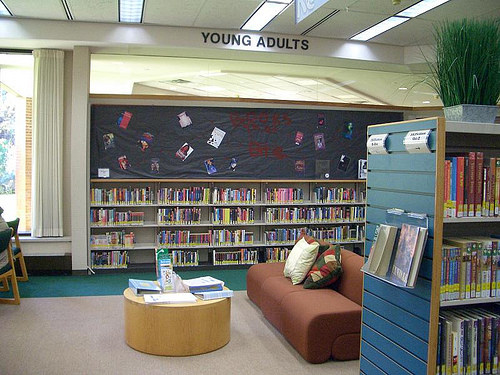
Because while perusing the YA section in a bookstore a few months ago (one worker told me to hang on while he found someone else to help me, because he doesn’t read anything in the YA section), I came across these:

The Last Unicorn, by Peter S. Beagle. Oh, my. How had I not discovered this yet? I bought it and read it aloud to my son over the next several weeks. If only I could write an entire novel this lovely and perfect . . .

Something Wicked This Way Comes, by Ray Bradbury. A huge inspiration. I used this as a comp title for my novel since it’s also written in third person and incorporates an adult point of view (rare for young adult). Would I love to say my book is a fraction as cool as this one? Of course, but I wouldn’t dare.

Maniac Magee, by Jerry Spinelli. I recognized this book because my 6th-grade daughter had it assigned last year. One Friday, she left her copy at school, so we went to the library and checked out another. Now that we had two, I started reading one, and couldn’t put it down. I would have been proud to write this book.

Speaking of 6th-graders, I recently had the chance to sit in on their Socratic discussion of another assigned novel, and wow. Nothing gets by them. They debated themes, metaphors, symbolism, foreshadowing, character growth, conflict and climax, denouement—and they did it with passion and intelligence and humor.

I couldn’t help thinking of the adult titles topping the bestseller lists. Wait—my book is going to be shelved in the young adult section? Yes, please!