Interview with Rebecca Lloyd, Author of The View from Endless Street

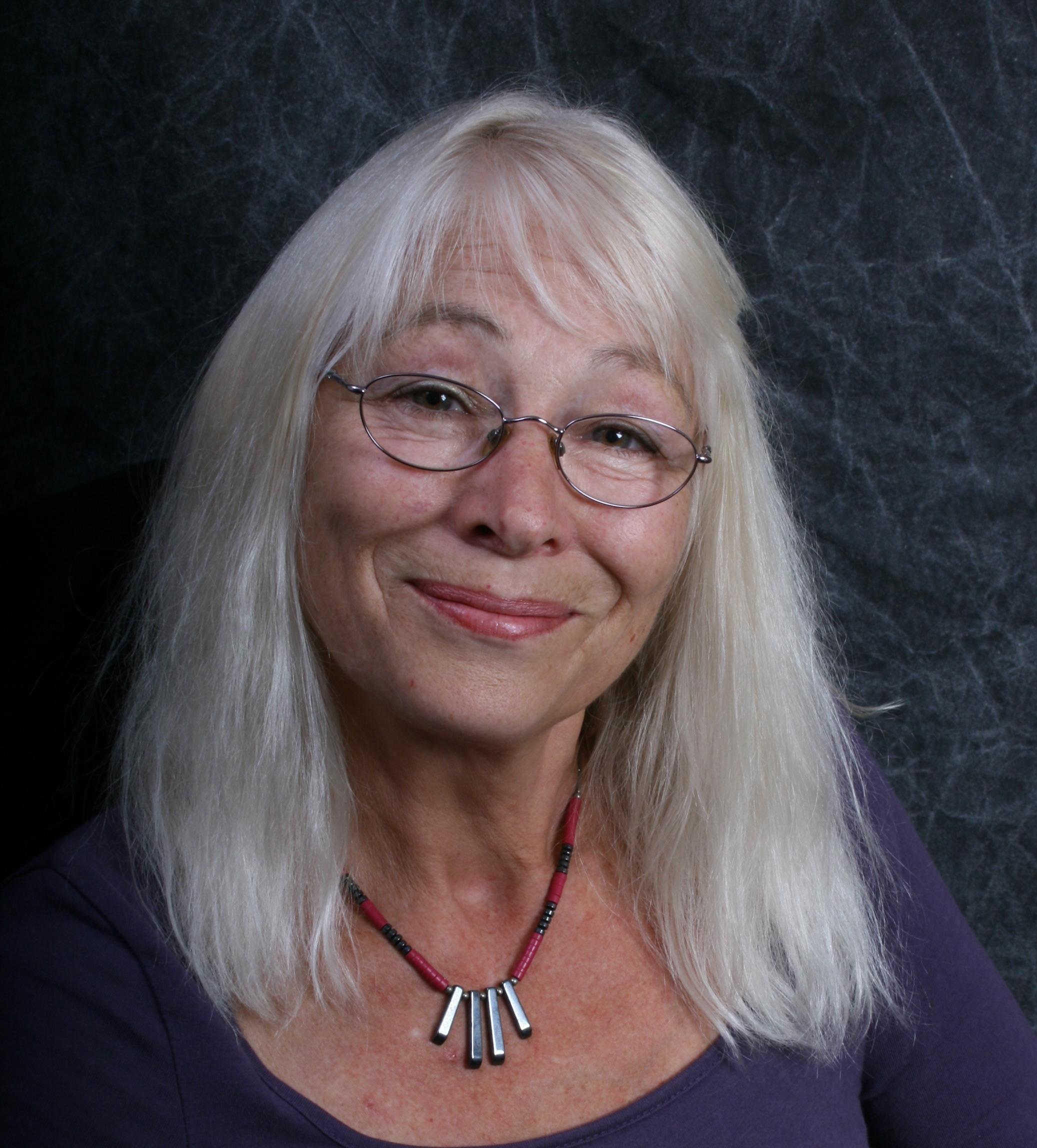
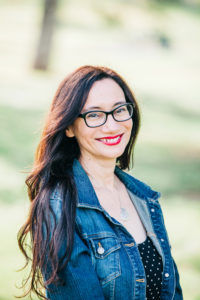
Author Rebecca Lloyd Photo by Tomlinson

Author Rebecca Lloyd
Photo by Tomlinson

I am so pleased to have author Rebecca Lloyd visit with me today on her blog tour. Rebecca and I share a publisher, WiDo Publishing, and I’m a little in awe after reading her short story collection The View from Endless Street: Short Stories from the South of England. It’s a wonderful book filled with gorgeous writing and quirky characters and…well, check out the blurb below. After that, read my interview with Rebecca and leave her a comment–she’ll be popping in from England and wants to hear from you!

About the Book:

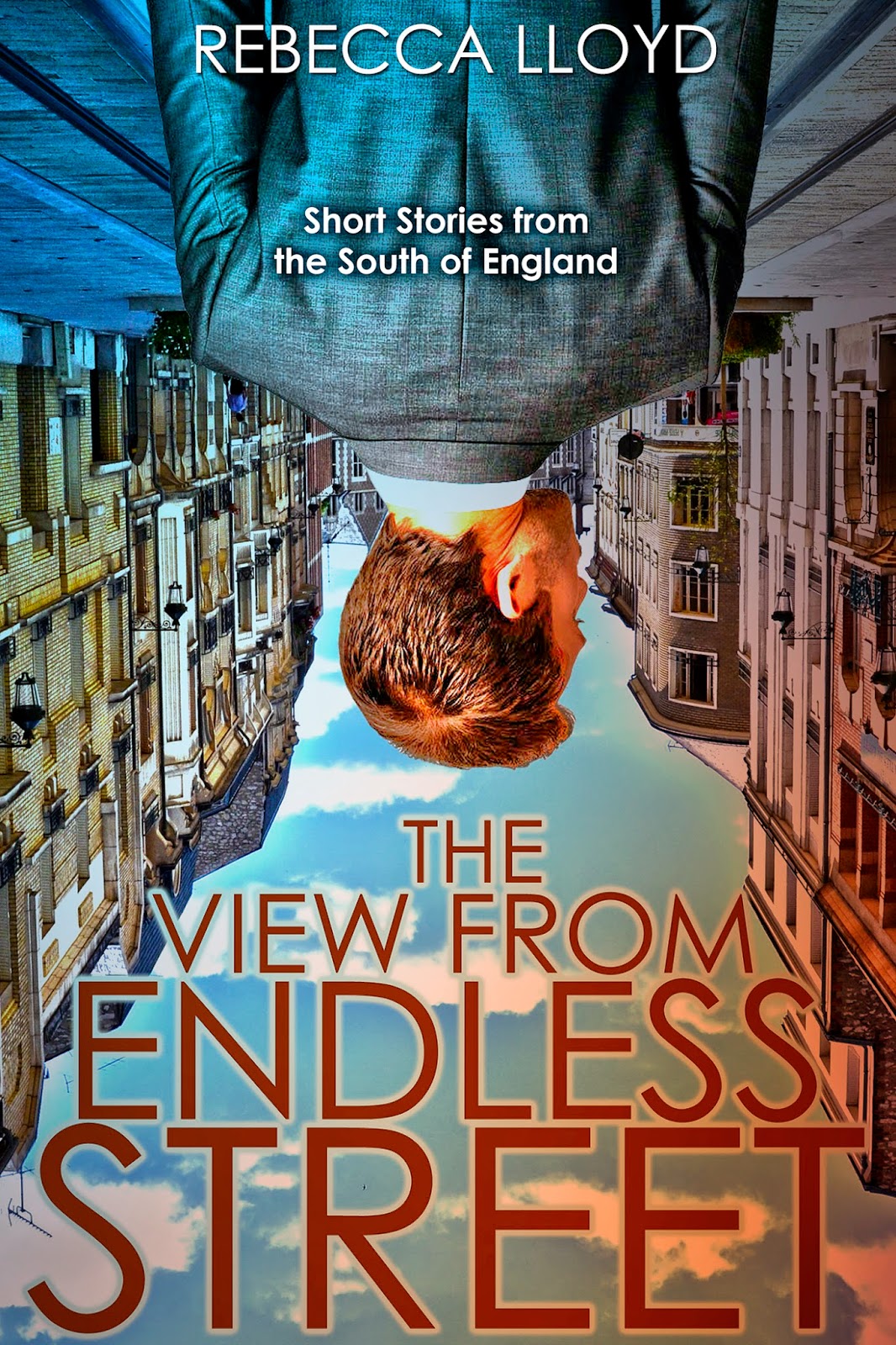
EndlessStreet_CVR_MED

With this collection of short stories set in the south of England and beyond, Rebecca Lloyd explores relationships and the brave or foolish things they can make people do. These stories about murder and ghosts, delusion and desperation, obsession and arson, show readers a sometimes sweet, sometimes macabre vision of humanity. Rebecca Lloyd channels Roald Dahl’s wit and flair for the unexpected in this collection that will appeal to the quirky side of the literary reader.

The View from Endless Street is available in print and in ebook format:
To order from WiDo Publishing, click here.
To order the Kindle version from Amazon, click here.
To order from Barnes and Noble, click here.

Don’t forget that if you own an e-reader, you can sample The View from Endless Street for free. The free sample allows you to read Rebecca Lloyd’s award-winning short story, The River, in its entirety. So you have nothing to lose by giving it a try, and I can almost guarantee you’ll want to read more. 😉

About the Author:

Rebecca Lloyd lives in the city of Bristol in the South West of England. She has two daughters and three grandsons. Apart from fiction writing, she works as a writing tutor and editor. She won the Bristol Short Story Prize in 2008 for a single story – The River, and in 2010 was a semi-finalist in both the Hudson Prize for a short story collection and the Dundee International Book Prize for a novel. In 2014, she was shortlisted in the first annual Paul Bowles Award in Short Fiction. She is the author of Halfling, (Walker Books 2011), and co-editor of the anthology Pangea, (Thames River Press 2012).

Rebecca is on Goodreads and Facebook.

Elizabeth: You write on your blog that it’s easy for writers to fall out of the habit of writing and that it can take “a huge effort to get back into it.” Can you tell us about your own writing habits?

Rebecca: Well, when I had to work for a living, I’d get up at around 5am, or sometimes earlier because I liked to watch the dawn, and I’d write until 8am and then do my day’s work. Now that I don’t work, my routine is a great deal less rigorous, I get up at around 7.30am and I’m at my desk by 8am. I work until lunchtime and then after that, the rest of the day can start. I try to stop writing when I sense my brain is getting tired, you know, like when you’re starting to write lame dialogue. If that happens I know it’s time to leave the computer, but I make a note alongside the text which would say something like ‘would she really have said those words under the circumstances?’ The next day, I can get back to it and deal with it.

I try not to open my emails or do any social networking stuff before I’ve done my morning’s writing. In the afternoon, I might still be very engrossed with the emerging story and so I carry a notebook with me wherever I’m going, as ideas might suddenly arise in my thinking, or structural issues might solve themselves in my head, and I would need to make a note about it.
I think the important thing is that I’ve trained myself over many years to put fiction writing first before all other matters, and I guess it must be because I write every morning that I’m thought of as a prolific writer. But as I live alone, I do have the freedom to make choices like that. I always say to student writers that they must fight for or negotiate for their writing time with partners and family, and stay strong about it.

Elizabeth: Which authors in particular inspired you?

Rebecca: I enjoy some writers and marvel at others, but authors don’t inspire my own work, rather the curious behaviour of my fellow humans inspires my work.

But of the writers I read and admire, Walter de la Mare comes right up at the top, but it’s true that he can become so obscure that it’s impossible to understand him sometimes, but otherwise he’s glorious. I’m very fond of Robert Aickman; he is a fine writer of the creepy stuff. And Jane Bowles is another favourite, she was the wife of Paul Bowles who is a better known writer than Jane. A.L Barker is a very exciting and peculiar writer as well. John McGahern is also a wonderful writer; I’d recommend his book Creatures of the Earth.

Elizabeth: Do you plow through your first drafts, and then go back to refine them? Or do you edit as you go along?

Rebecca: Yes, I tend to carry straight on with a story and not stop to improve it as I work, although I might leave myself messages, particularly if I have to research something, when doing the research right then and there would break the flow. Of course there are writers who perfect each sentence as they go along, but I would be afraid for them that they might lose the bigger picture, or the mood, or the tempo of the story by working like that. I think it’s more practical to try to get the story down from start to finish and then in as many other drafts as it takes, perfect it. I even write out what is going to happen in the story at the top of the page these days before I begin so I can look back and remind myself of the storyline again.

Elizabeth: You’ve published both novels and short fiction. Do you prefer one over the other?

Rebecca: I prefer writing short stories. I have written a few novels, one that does the rounds repeatedly but can’t find a publisher yet, and another, Halfling, which was published by Walker Books and is for nine to thirteen year olds. I confess to having other finished novels in ‘drawers,’ and they will probably never come out now. Short story seems to be my natural writing place, but it’s good to know how to do both, particularly if, like me, you teach writing because a lot of students want to write novels, so the tutor’s experience of novel writing is valuable.

Elizabeth: What are some unique challenges in writing short stories?

Rebecca: One of them might be developing the ability to leave out anything which has no immediate bearing on the story; sometimes it’s tempting to add small touches or moments that ultimately don’t add anything to the whole, but that skill of discernment eventually just comes instinctively. I suspect the same thing might not be essential in the writing of a novel in which there is space and room to put in quite a lot that’s not exactly to the point.

Another challenge might be, well, the simple fact of finding a story good enough to write in the first place. I always say that if you think you’ve found a good story, whatever its source, newspaper article, incident on the street, historical moment, personal experience of something, make sure you do capture it in words because there aren’t that many interesting stories to be had… but as I say that, I’ve got to concede that it might be that there are times in our lives as story writers when we are deeply attuned to what’s going on and we can see stories all around us, and then at other times the stories just don’t seem to present. It’s a state of mind, but it’s one that requires conscious nurturing.

Elizabeth: One thing that’s striking about your work is that you don’t draw attention to the strangeness of your characters’ situations. The surreal elements are subtly woven in, giving them much more power. Is it difficult to show restraint and resist the need to explain/describe everything?

Rebecca: I have to confess that I didn’t really know my writing was at all strange until this year with WiDo Publishing likening me to Roald Dahl and Tartarus Press, who only publish weird fiction, taking me on and publishing another story collection of mine called Mercy. And that’s a case in point, the story ‘Mercy’ was based on the real life of a man who was in love with a …corpse. As the story is told through his eyes, he wouldn’t find his situation in the least bit strange. His concern is keeping the corpse from falling apart. But that story is also a commentary on the relationship between men and women in the world, as well as being a love story in its own right. Then, the story that you mentioned earlier on – The Snow Room – I feel there isn’t anything that couldn’t have happened in real life in that story either, and the male character, Bernie, is based on a very nervous man who came to stay in my house in Africa for a couple of days, and who had a lot of Bernie’s behaviours. That’s a good example of how keeping a writer’s notebook is so very valuable, because I didn’t invent the Bernie character in The Snow Room until maybe a decade after I left Africa.

But you ask is it difficult to resist the need to explain? No, not in the slightest, all that is needed in order not to go down the road of explaining anything is that you have complete faith in your story and confidence in your writing, and crucially, belief in your readers’ intelligence. Beginner writers quite often do have to battle with exposition, and some understand it very quickly and others take a while to know when a paragraph or phrase is exposition. I always say that writers are just like actors, even if you’re writing in the third person. So if you were on stage ‘being’ a character, you wouldn’t have moments when you explained to the audience what you were doing. You’d expect them to do the work necessary in order to understand your character. Exactly the same with writing.

Elizabeth: You teach fiction writing–what’s the one thing you most want your students to take away from your class?

Rebecca: Only this, the determination to continue writing against all the odds if that’s what it takes. A writing course can set you up with some good writing practices and some useful tips, things that you might have taken a long time to find out by yourself. But after that, a writer must have passion, discipline and self-belief. I sometimes see moments on my students’ faces when they come to realise that writing is a real dedication that requires genuine commitment, when in the first couple of sessions they had supposed that learning to write fiction would be like learning to make jewellery. I sometimes see my ex-students in the street and I hesitate to ask the question ‘are you still writing?’ I don’t want them to say no, but fear they will.

Elizabeth: Coffee or tea?

Rebecca: Coffee, strong, black and scalding, I’m going to make it now.

Join Rebecca tomorrow for her next stop on the blog tour! And today she’s hanging around HERE to answer questions, so leave a comment and start a conversation. I assure you, she is lovely to talk to. 🙂

Prepared to Launch! Or Not

Image from Flickr by cameraslayer

Image from Flickr by cameraslayer

The month before a book release feels a lot like the final month of a pregnancy. Obviously not the physical aspects like swollen ankles and freakish ballooning belly, although there are the occasional moments of shortness of breath, triggered by the knowledge that something intimate and protected inside you will soon be exposed.

But it’s more the sense that you’re rushing toward a conclusion and a beginning, and that you’re ready for neither. You’re afraid and insecure and hopeful and exhilarated. You’re caught in a mess of daydreams—there are a hundred things left to do and you can’t focus on even one.

I remember the first time I walked into a Babies-R-Us, feeling incredibly alone. I stood in that enormous store, wielding a gray scanner, and wondered what on earth to choose. The girls throwing my baby shower told me to scan everything I needed; people love buying baby gifts, they said. But I didn’t know what I needed.

One mother told me a crib was absolutely necessary; another scoffed and said, “Sure, they make great laundry baskets.” One friend advised me to pick a changing table, but I’d read that babies have a tendency to roll off of those. (Now that I’ve been through it twice, I can tell you that the only piece of new furniture a mother needs is a good rocking chair.)

Trying to prepare for a book launch is just as confusing. Everyone who’s been through it has a different opinion. There are so many things you CAN do, but which ones are really necessary? Press releases, press kits, blog tours, radio interviews, launch parties, social media, book signings, blog posts, giveaways, speaking engagements, conferences, festivals, bookmarks, book charms, postcards, flyers—the list goes on.

It’s easy to become paralyzed by so many choices, and to think, “I’ve waited a long time for this day and I’m SO ready for it to be here but…WAIT, I’m not ready!”

Too bad. June is coming, and it’s going to be crazy, and it’s going to be great. And at least I got the bookmarks.

On Dreams

Image from Flickr by Marshmallow

Image from Flickr by Marshmallow

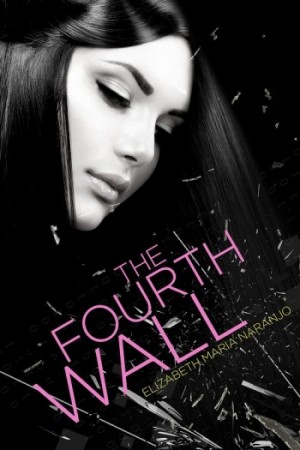
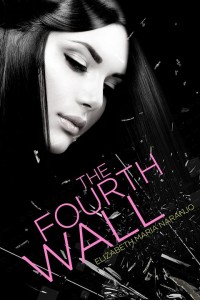
I received an email the other day from my managing editor, saying the final edit of The Fourth Wall was attached and could I fill in the dedication page and the acknowledgments page?

Sure, I could do that. (Are you kidding me?!)

But first I thought I’d check the book over. One last time, you know. Because two years maybe wasn’t enough time to edit it, because maybe there was something I missed.

I have never read through this novel without wanting to change something. Why is that? Some short stories I look back on and think, “If I had a chance to edit this again, I don’t think I’d change anything.” There aren’t many like that, but I can think of two. (Both are written from a male point-of-view. Sections of The Fourth Wall are also written from a male point-of-view, and those are my favorite scenes. I hope you’ll tell me yours.)

Perhaps a novel is just too big for a writer to see clearly. Whatever the case, it doesn’t matter, because it’s too late to make changes. The copy I have now is the one you’ll be reading in June. 😉

It’s hard to describe how vulnerable that makes me feel, although I suppose a good analogy would be that dream you used to have where you’re naked on the school playground. Remember that one?

Oh, but don’t feel sorry for me. I had the audacity to write a book and ask you to read it. I’m ready to submit to your judgment. So, speaking of dreams–I want to introduce you to a girl named Marin. She’s a lucid dreamer—someone who can create and control her own dreamworlds.

At least she thinks she can.

[click here to meet Marin]

Dear Writer on Twitter: Don’t Be a B*!#*

Image from Flickr by chrisinplymouth

Image from Flickr by chrisinplymouth

I love writers, and I love Twitter. But I’m getting tired of writers on Twitter. Why?

Because writers tend to brand themselves so successfully they become nothing more than their brands.

And that’s sad, right? None of us is one dimensional. When a person is passionate about a topic to the point of obsession, it can be sweetly endearing. But there’s a difference between someone reaching out to others for a shared sense of belonging and someone selling their brand, and the difference is always obvious on Twitter.

Honestly, I’m not all that interesting. If Facebook broke down the subject of my posts into percentages, I’m sure 90% would be about my children. So I hate to judge others for being boring. 😉

But when writers only tweet about their writing, or the subject of their writing, or links to other authors’ writing in the hopes that those authors will then tweet links to their writing, it’s beyond boring, it’s self-defeating. These tweets are just thinly veiled commercials, and people tune them out.

A blog should be focused—readers are coming to you for a particular reason. But Twitter is a conversation, and it’s much more fun when the conversation is varied. Pick three things besides your writing that you love, do a search for those subjects and connect with others who share your interests. I reached out to people passionate about writing and reading, but also to those tweeting about parenting, baseball, and my favorite bands. The music fans are the most fun. 🙂 What drags down my Twitter feed are the writers.

Please stop selling yourself short. Stop selling yourself period. I get it—you’re a writer. Hey, me too! That’s probably why we connected in the first place. Now do us both a favor and talk about something else.

I promise not to unfollow you if you sometimes post about your cat, or the sunset, or how great it felt just now when a song you love came on the radio at exactly the moment you needed to hear it. Be inspiring, be interesting, be funny, be vulnerable, be nerdy, be cool, be yourself.

Don’t be a brand.

Line Edits, Book Covers, and What Really Scares Me

Image from Flickr by epSos.de

Image from Flickr by epSos.de

In late November I submitted the first round of content edits back to my editor. It was a grueling month in which I added nearly 8,000 words to a manuscript I had once considered complete. Boy, was I mistaken. Gory details here.

Two months passed. In December it was easy not to look at the manuscript. I would have preferred reading an automotive repair manual. But by mid-January, I was itching to dive back into the book to see how my new scenes meshed. I worried they were terrible—first draft stuff and all that. I couldn’t open the manuscript, however, because of course I would have started editing it—a wasted effort if the new scenes weren’t approved. So I waited.

And then I got an email that sent me over the moon: my editor loved the new scenes. So much that we had skipped the second part of a three-part editing process and moved straight into line edits; she was working on those now.

I whooped! I cheered! And then I immediately began to worry about the line edits. Would she tear apart my sentence structure? Would every page be marked with Track Changes? Would she suddenly realize she was working with a fraud who somehow managed to get this far calling herself a writer?

Luckily, none of the above applied. Aside from a horrifying display of poor comma usage, the manuscript was pretty clean. The areas that needed the most work were easily fixed by deleting whole paragraphs of description—which isn’t as hard as it sounds when you’ve read those paragraphs forty-eight times. And when a reader, my editor in this case, says, “This part’s kind of boring,” I believe her. I have to. I’m not taking any chances.

No writer can please everyone—there will be some people who don’t like my writing style, and some who don’t like the main character; there will be many who don’t like the ending, and that’s fine. The only thing that really scares me is boring a reader.

So after chopping some sections, fixing awkward phrases, clarifying a few issues, and getting schooled in comma splices, I returned the line edits and am now waiting for a final proof. Discussion over the cover has ensued (and because I’m with a small press, my opinion matters), and there is a chance that my original title, The Fourth Wall, will stand. Wish me luck on that one, will you? I’m a bit attached to it.

Where to Get Your Work Critiqued (and Why You Should)

Image from Flickr by LocoSteve

Image from Flickr by LocoSteve

The quickest way to improve your writing is by getting it critiqued. Reading blogs and books is fine too, but it can be redundant—you’re slogging through the same general advice, looking for solutions to your unique writerly problems. We all have them, and they’re hard to spot.

Several years ago, I wrote a story about a single mother taking her daughter to a baseball game. I revised it endlessly, and after a year or so started submitting it. No takers. I set it aside for a few months and re-read it. I thought it was pretty good but had to acknowledge something was wrong. Some minute thing having to do with rhythm and flow in the center of the story, but I couldn’t put my finger on it.

Finally, I submitted it to a contest for ten bucks and paid another ten for a critique. I didn’t win the contest, but I found out what was wrong. The reviewer pointed out that, for a story as short as mine (less than 750 words), I’d overused the “power of three.”

I knew instantly what she meant, because “Oh come on, how did I not see that?!” I eliminated one of the phrases, changed two sentences from passive voice to active voice on her suggestion, and submitted it to Literary Mama. “Flight” was accepted, and became my first published story.

Another benefit from having your work critiqued is knowing what you’re doing right. It’s never obvious, is it? As writers, we’re repeatedly warned that those passages we love most are the ones that should probably die bloody, red-ink deaths. “Kill your darlings!” But that’s not always true. Writers spend years honing their instincts, so it makes sense that their instincts are often right. How do you know when to trust them? You get an objective opinion. Not a family member. Not a friend.

“But objective opinions are still just opinions and therefore actually subjective.” That’s true, smarty pants, which is why when I revised “Flight,” I didn’t follow every suggestion from the reviewer. I recognized a few of them were stylistic preferences, and I chose not to implement them. You have to find that sweet spot—somewhere between paralyzing insecurity and stubborn arrogance—to get the most from a critique and become a better writer. And you do want to become a better writer, right?

Here are four places to get your work reviewed; I have used all four and fully recommend them. For the first three especially, make sure your work is as polished as can be first, because you’re also submitting it. If you’re looking for feedback before you submit your work, skip to #4, or check out my Classes and Critiques page.

1. WOW! Women on Writing: WOW! runs a quarterly flash fiction contest; it costs $10 to submit an entry and an extra $10 for an optional critique. Sound familiar? 😉 Since submitting “Flight” I’ve paid for several more critiques on contest entries, and each time I’ve learned something new. Feedback is broken down into the following categories: subject, content, and technical, with an overview of your story. Once you start using the feedback to improve your work, you just may earn back your entry fees in future winnings (WOW! pays hefty cash prizes).

2. Blue Moon Literary & Art Review: submitting to this magazine costs nothing, but if you want feedback, you can pay $10. I paid the $10 and although my story was rejected, I received a very nice, thoughtful critique. I applied most of the editor’s suggestions and resubmitted to a magazine called Bartleby Snopes. The story was accepted, and was later nominated for a Pushcart Prize. Money well spent! And speaking of . . .

3. Bartleby Snopes: Nathaniel Tower not only runs a fantastic fiction magazine, he is an all-around cool guy, and super generous. There’s no submission fee to submit to Bartleby Snopes, and every submission receives feedback—anywhere from one sentence to several paragraphs–unless the author chooses the “no feedback” option. In the past three years, I’ve submitted to a whole lot of magazines, and this is the only one I’ve come across that guarantees a personal response from the editor. See? Cool guy.

4. Story in Literary Fiction: William H. Coles is a prolific author passionate about the art of literary fiction. His website is loaded with resources for fiction writers—in-depth articles covering dialogue, characterization, point-of-view, narrative arc, humor, conflict, you name it. Mr. Coles offers the following services for free: a manuscript evaluation of up to 1,200 words, a workshop and a “Mentor’s Corner” where you can ask him any question related to literary fiction. Anything you post under these three services will be on the website. That didn’t stop me, though—click around in the workshop and see if you can find me. 🙂

Note that three of the above accept fiction only. Blue Moon Literary & Art Review accepts both fiction and nonfiction.

Good luck! Keep writing.

One Simple Resolution

Image from Flickr by shutterhacks

Image from Flickr by shutterhacks

My New Year’s resolution has nothing to do with writing. Well—not directly, anyway. It has to do with reading.

About 2 ½ years ago, my cell phone died. I visited the Verizon store, tugging on phones attached to cables, tapping screens, pushing buttons, looking for the perfect match. When I found it, I waved the customer service rep over and told him I’d like “this one, without the data plan.”

“Um—this one doesn’t come without a data plan.”

“Well, which one can I get that doesn’t have a data plan?”

“You mean—you just want a talk/text phone?” He seemed dubious. This was apparently not a common request.

“Yes, just a regular phone. Without the Internet.”

He steered me to a lonely corner, where a sad little flip phone awaited, like the orphan who knows he will never be chosen.

I ended up with an iPhone. A $30 data plan. The world at my fingertips. And, just as I’d feared, an irresistible, time-sucking device. Coveted moments at night–when my son has drifted off to sleep and I lie burrowed in quiet comfort–used to be reserved for reading novels; now it was time spent scrolling through writerly blogs, parenting ezines, online literary magazines, Twitter feeds, Facebook, and Yahoo! News.

It’s still reading, I told myself. Essays, short fiction, very important news, advice, interviews, information.

But it’s not the same. There’s no substitute for reading books, and I’m not reading enough of them. It’s not my iPhone’s fault, or technology’s, or Twitter’s—it’s my fault. I’m horribly undisciplined when it comes to time management. My contract is up, and soon I may just go shopping for a feature phone. I hear they’re in demand lately.

As for my New Year’s resolution, I’ve committed to reading one book per week, starting with Neil Gaiman’s The Ocean at the End of the Lane. It’s January 1, two in the afternoon, and already I’m on chapter four. This should be an easy resolution to keep.

In Good Company

I didn’t set out to write a YA novel. I just wanted to write a book. Afterwards at a conference, when asked to identify the book’s genre, I proudly declared it “literary fiction.”

The panelist groaned. “Oh, don’t call it that,” he said. “When you say ‘literary fiction’ people’s eyes will roll back in their heads.”

I thought that was pretty funny, and it knocked me off my high horse, but I didn’t know what else to call the book. After some research (hint—do this before you write a book, not after), I knew I’d written a young adult novel.

But I didn’t want to admit it. Why? I’ll tell you—only please don’t judge me too harshly.

I was afraid I wouldn’t be taken seriously.

There are many people in the literary community who look down on the young adult genre. They were practically salivating when J.K. Rowling’s adult novel debuted, couldn’t wait to tear it to pieces—believing an author who writes “for kids” can’t write for adults as well. (Anyone who believes this really needs to check out Maile Meloy.)

I imagined the thin, condescending smiles on faces of other writers who asked what kind of book I’d written. “Oh. A young adult novel. Are there vampires in it?”

It’s such a narrow and misguided view that it shouldn’t bother me, but like most writers I’m rather thin-skinned and sensitive to criticism.

Which is my problem. And I’m so over it.

Because while perusing the YA section in a bookstore a few months ago (one worker told me to hang on while he found someone else to help me, because he doesn’t read anything in the YA section), I came across these:

The Last Unicorn, by Peter S. Beagle. Oh, my. How had I not discovered this yet? I bought it and read it aloud to my son over the next several weeks. If only I could write an entire novel this lovely and perfect . . .

Something Wicked This Way Comes, by Ray Bradbury. A huge inspiration. I used this as a comp title for my novel since it’s also written in third person and incorporates an adult point of view (rare for young adult). Would I love to say my book is a fraction as cool as this one? Of course, but I wouldn’t dare.

Maniac Magee, by Jerry Spinelli. I recognized this book because my 6th-grade daughter had it assigned last year. One Friday, she left her copy at school, so we went to the library and checked out another. Now that we had two, I started reading one, and couldn’t put it down. I would have been proud to write this book.

Speaking of 6th-graders, I recently had the chance to sit in on their Socratic discussion of another assigned novel, and wow. Nothing gets by them. They debated themes, metaphors, symbolism, foreshadowing, character growth, conflict and climax, denouement—and they did it with passion and intelligence and humor.

I couldn’t help thinking of the adult titles topping the bestseller lists. Wait—my book is going to be shelved in the young adult section? Yes, please!

This is Your Brain After Developmental Edits

Image from Flickr by Andrew Malone

Image from Flickr by Andrew Malone

Remember that commercial from the 80s where some guy holds up an egg (“This is your brain.”) and then cracks it into a sizzling frying pan (“This is your brain on drugs.”)?

That’s a writer’s brain after a round of developmental edits.

I sent them in today, after four weeks of wrestling with plot lines, ripping open scenes and patching them with new ones, and ruthlessly deleting a character who just didn’t fit in anymore. (Hey, it’s been a long month, and I had to take it out on someone.)

I’ve had days when I tacked on 1,000+ words, and days when I worked just as hard and ended with a net loss of words (those are the better days—it’s more fun refining than writing first drafts). I neglected a paid writers’ workshop, an expensive mid-November conference, my blog, and the whole idea of NaNoWriMo.

There have been other ups and downs in November. My application to teach an essay-writing workshop was denied based on a lack of formal teaching experience. My short story The Marshmallow Tree won honorable mention in a contest. I turned down, for the first time, an invitation for a reading due to an utter lack of ideas (refer to analogy of fried brain). I received two rejections on short stories, but one of those rejections came with helpful, encouraging notes. And I met my goal to finish the first round of edits on The Fourth Wall by November’s end.

In short, I’ve been living the writer’s life. I don’t know whether to laugh, or cry, or maybe just read a good book. But I think I’ll call it a month. Happy Thanksgiving, and I’ll see you in December!

Back to Basics

Image from Flickr by yiorgos georgiou

Image from Flickr by yiorgos georgiou

Last week was scary. Not because a 6-foot tall Grim Reaper jumped from the shadows of my neighbor’s porch and hissed at my children (that was actually pretty great), but because I experienced a serious case of writer’s block. And I’m under contract.

When I received my initial round of edits on The Fourth Wall, I was ecstatic. This is the part, I’d been told, that hurts the most. These are the “big picture” changes, when you have to delete major characters you’ve invested years in, when your favorite scenes are gutted, when you’re asked to rewrite an entire novel in a different point of view (my worst fear).

None of that happened. My editorial letter had lots of suggestions, but the big ones involved adding to the book. This makes sense; I do write flash fiction, after all. Everything I’ve published thus far has been short; most of it was written to a word count: 500 words, 1,000 words, 250 words. When I sent my novel off to WiDo Publishing, it was a trim 45,000 words, and even that seemed indulgent.

Wow, so I get to write more, I thought. No problem!

Here’s the problem. I wrote The Fourth Wall three years ago. Since then, I’ve tinkered with it: plugged up holes, rewritten dialogue, added depth to characters, extended scenes . . . but I couldn’t remember when I’d last added new scenes. Where would they go?

I scrolled up and down the manuscript, trying to see what could be split apart to make room for new material. I typed pages of notes. But I couldn’t see. And that worried me, because without knowing what to write and where to put what I did write, I wasn’t excited about writing at all.

I was stuck.

Time to try something else. On Sunday, I printed a hard copy of my novel, spread out the pages, and began writing notes by hand. I crossed out sentences and scribbled in margins, and soon the only difficult part was keeping up with the ideas.

Somehow, the physical act of holding paper and writing with an actual pen made me feel more in control. And it’s easier to slash through paragraphs on a page, because it doesn’t feel permanent. Yeah, you can create a new document and know your old one is intact somewhere on the computer, but it’s still hard highlighting a paragraph, hitting “delete” and watching it disappear.

Since Sunday, I’ve added 3,000 words to my novel, and more importantly, I’m excited about the new material. It feels like it did when I was writing the first draft; I’m so fully immersed in my characters’ world that I’m jotting notes in bed, at the dinner table—stealing any moment I can. I’ve been waking up at four in the morning, for God’s sake, and I’m not one to emerge from under the covers until the third snooze alarm.

This is when being a writer pays off. When you can reclaim the pure joy of creating something, when you stop and realize, “my job is making up a fictional world and filling it with make-believe people, and dammit, that’s supposed to be fun.”

And it is. In fact, I think I’ll go back to work now. You’ll overlook any typos in this post, won’t you? I’ve been up since four.